

As the year cools, western Quang Tri takes on a softer palette. Along Rao Quan Lake, the Phong Huong trees turn shades of gold, amber and deep red against the evergreen folds of the Truong Son range. Their colors gather on the still water, while the hills recede into the distance. It is a brief, quietly beautiful season—one that makes you want to slow down and take in the landscape rather than hurry through it.
Where is Phong Huong Forest?
The forest is found around Rao Quan hydropower reservoir in Huong Phung, in Quang Tri’s Khe Sanh highlands. The trees are also known locally as sau sau or bach giao huong. Growing along the lakeshore and hillsides, they create a distinctive landscape when their foliage changes color.
Here, the scenery unfolds in layers: open water in the foreground, wooded slopes beyond, and distant ridges tracing the horizon. The leaves do not all change at once. Green remains among the yellow, orange and crimson, giving the forest depth and a natural, ever-shifting character.
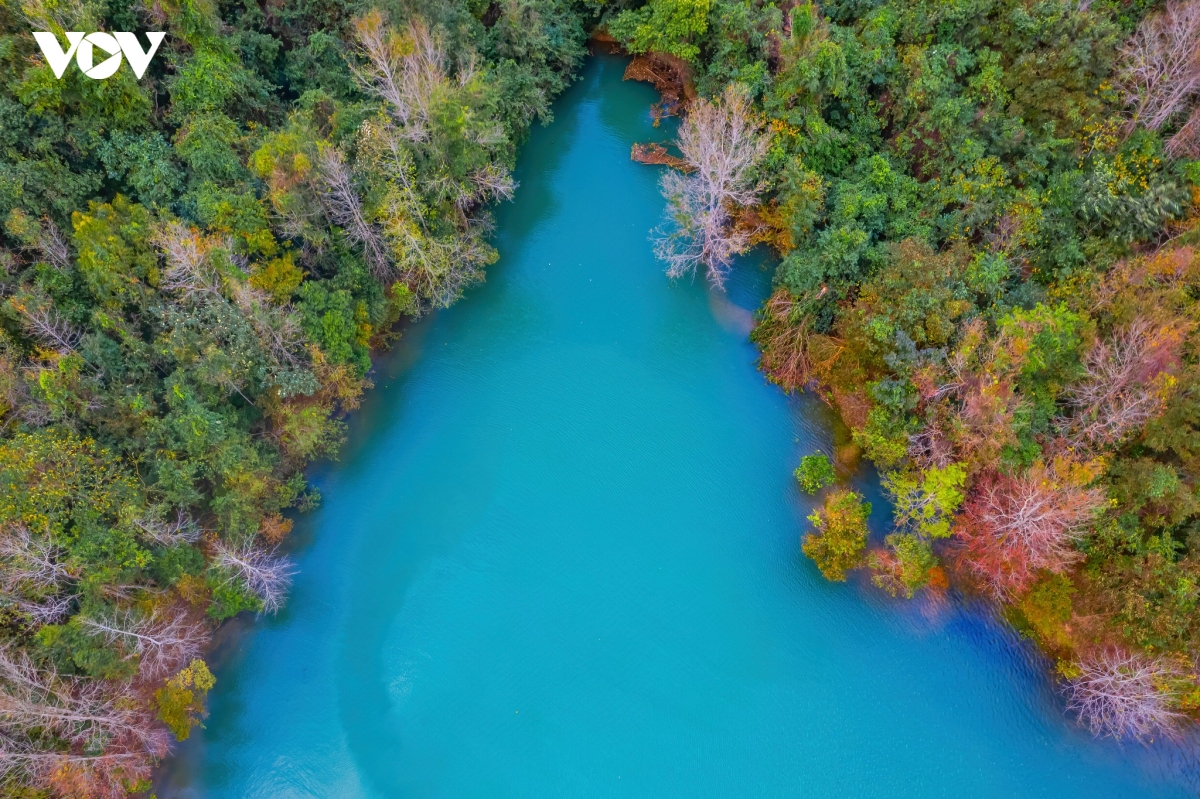
A seasonal visit, with no fixed calendar
The changing-leaf season is generally associated with late November through January, but the timing can shift from one year to the next with weather and local conditions. Some trees may begin turning earlier, while richer colors arrive later. If you are planning a visit, check recent local updates on the foliage and weather before setting out instead of relying on a fixed date.
From the water, the forest feels close and unhurried: colored leaves ripple in the reflections, tree trunks rise from the shoreline, and the hills open toward a wide sky. It is a lovely way to experience the season—not just as a photo opportunity, but as a pause beside the highland lake.
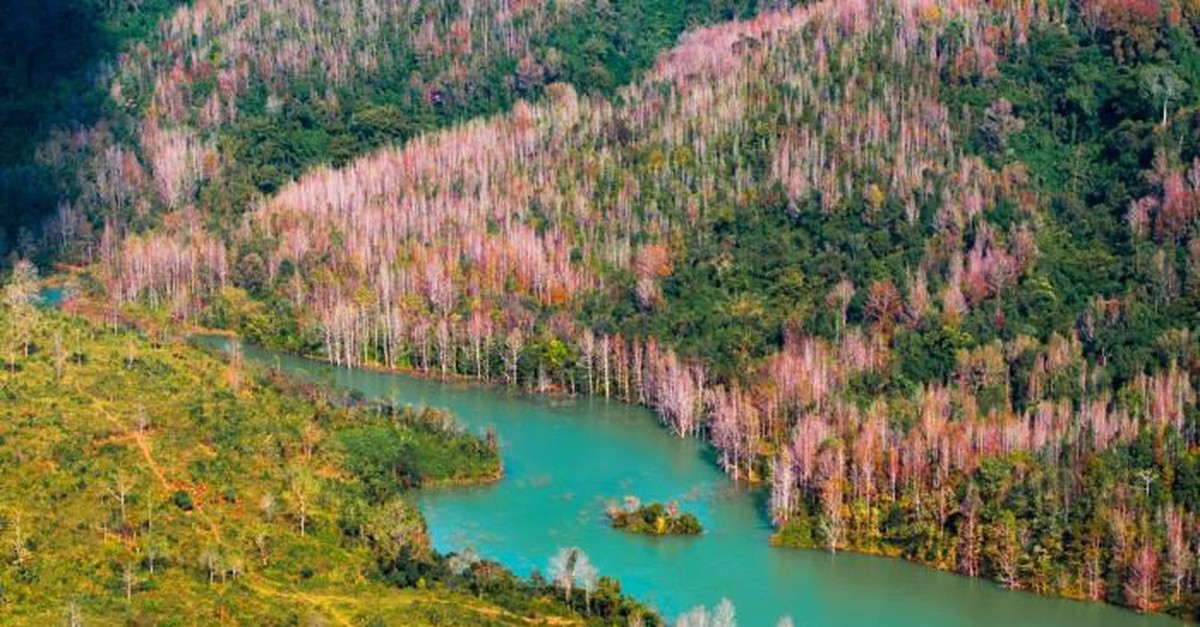
See the forest from the lake or on foot
Depending on conditions and the activities available at the time, visitors may view the forest from a boat, walk along suitable paths, or join a trek with a local guide. Some trips may offer activities such as stand-up paddleboarding, but services and permitted areas should be confirmed in advance. Water levels, weather and reservoir operations can all affect access and plans.
From above, patches of red and gold appear like warm brushstrokes across the green hills and water. Rather than searching for one perfect tree, take in the shoreline, the lake and the layers of mountains together. The forest’s beauty lies in those changing colors—and in the fact that the view is never quite the same from one season to the next.
Make the journey part of the experience
The forest and lake retain a natural, quiet feel, so a little preparation goes a long way. Wear shoes with good grip, bring a light jacket, drinking water and a waterproof cover for your phone. If you join an activity on the lake, wear a life jacket and follow the local organizer’s instructions. Forest paths can become slippery after rain, so avoid unfamiliar trails and the water’s edge unless you know local conditions.
There is more to discover in western Quang Tri beyond the seasonal foliage. Continue with our guide to Khe Sanh’s misty mountains and coffee culture, or read about U Bo Mountain and Thac Chuoi Lake, another landscape destination taking shape in the region. And if your visit coincides with Phong Huong’s changing leaves, give yourself time to linger: listen to the breeze in the canopy, watch the colors settle on the lake, and carry home a quieter memory of Quang Tri.


 Contact us via Whatsapp
 Contact us via Messenger